13 - 15 April 2027Crocus Expo — Moscow


Co-located with
What has changed in the information technology market and what trends will determine the development of the industry until 2030.
In 2025–2026, the Russian IT market has undergone a fundamental shift: economic efficiency, security, fault tolerance and flexibility of architecture have come to the fore, and the speed of replacing one system with another has gone into the second and third place. Below are the main trends, barriers, the role of the state and the place of ExpoCifra as a platform where these trends turn into a direct dialogue with customers.
If in 2022 customers acted in the mode of emergency import substitution, then in 2026 the market is undergoing a high-quality replacement of foreign solutions with a focus on regulatory deadlines and long-term returns. Over the past four years, the market has advanced in mass corporate scenarios - office circuit, communications, document management, infrastructure software, information security.
At the end of 2025, there was a sharp jump in equipment prices: the cost of RAM increased significantly, followed by everything else. Budgets for 2026 were laid according to the realities of 2025, and the market moved from emergency replacement to systemic replacement of outdated solutions.
 |  |
As the market matures, the regulator is gradually reducing support measures: from 2026, a two-stage system of tariffication of insurance premiums has been introduced, while zero VAT on the sale and transfer of rights to domestic software from the Register is maintained.
Key areas of state policy:
Implementation of the national project "Data Economy"
New import substitution deadlines for enterprises with CII facilities: migration to local solutions has been postponed until January 1, 2028, and the requirements for the registry status, security and support of software and PACs continue to be strengthened.
Import Substitution: From Speed to Sustainability of Architecture
Import substitution turned out to be more extensive than the simple replacement of one product with another. Therefore, some customers are implementing repeated import substitution projects, moving from some Russian products to other, more mature ones.
Instead of a set of individual niche products, large Russian developers are building ecosystems of specialized solutions with a common technological platform and unified principles of management, integration, security, and support. Competition is shifting from the level of individual solutions to the level of platforms, consolidation is increasing, and high margins are achieved mainly by the leaders of their segments.
Artificial Intelligence: From Experiments to Economic Impact
The development of AI is part of the strategy to build an import-independent IT landscape. Within the framework of the national project "Data Economy", the federal project "Artificial Intelligence" was launched with a cost of 9.03 billion rubles. In July 2026, the law "On Support for the Development of Artificial Intelligence Technologies" was adopted, introducing the concepts of a sovereign and national AI model. According to Deputy Prime Minister Dmitry Grigorenko, in 2025, Russian companies invested more than 250 billion rubles in AI.
By the end of 2026, AI will move from experiments to industrial implementation: companies are looking for solutions with measurable benefits and economic effects. The mass introduction of multi-agent systems is expected after 2027-2028.
Barriers to AI adoption:
Shortage of AI infrastructure: only 9% of Russian companies are fully provided with AI infrastructure.
Lack of competencies and corporate culture for implementation.
Technological sovereignty and human resources
By 2030, the domestic IT market should move to a qualitatively new level: the implementation of the national project "Data Economy" will be completed, most of the enterprises subject to CII will create an import-independent landscape. Complete electronics factories based on Russian components - the horizon of 2030-2040.
Fundamental tasks of developers:
To increase the maturity of products so that quality, functionality, support and cost of ownership become the main selling point.
Build complex ecosystems - a controlled technological loop instead of a set of solutions.
To go beyond the domestic market and gain a foothold in friendly countries.
Shortages of personnel and IT budgets, which lengthen the project time.
Dependence on imported components in high-performance components: microprocessors, controllers, storage systems, network equipment, industrial PACs.
Pressure on export-oriented developers, independent product companies and startups.
OBIT analysts identify areas with different rates of development:
Fast-growing segments: system integrators (SAP/Oracle migration, custom development), providers of cloud infrastructure and data center services (migration from AWS and Azure, development of AI services), cybersecurity (forced demand after attacks).
Segments with mixed dynamics: ERP/CRM/BI systems (the offer does not always meet business expectations, lengthy implementations, sequestration of budgets), B2B SaaS (CRM, HR, analytics, process management - demand is concentrated around products with a clear ROI).
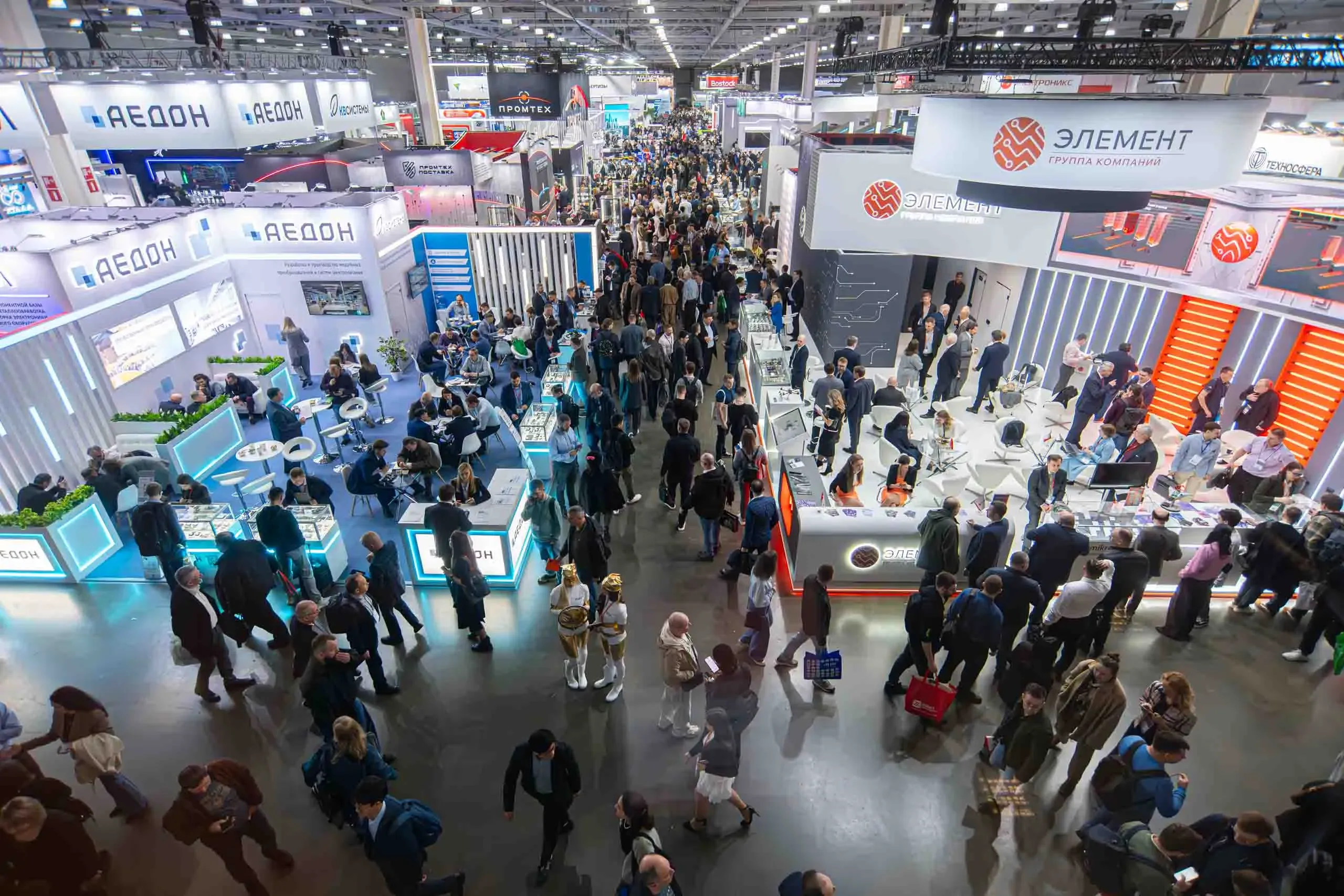 |  |
ExpoCifra 2027 will be held on April 13–15, 2027 in Moscow, Crocus Expo IEC, as part of the unified ExpoElectronica ecosystem | ExpoCifra. If your business is related to IT infrastructure, industrial automation, telecommunications, smart city, transport or navigation systems, this is the main platform to present your solutions to key market customers.