13 - 15 April 2027Crocus Expo — Moscow


Co-located with
The introduction of robots will not only increase labor productivity, but also solve the problem of labor shortages
Nowadays, robots are widely used not only in industry, but also in other industries. Their use allows solving a number of important problems: increasing labor productivity, reducing the number of defects, and, of course, helping to overcome the personnel shortage. Let's consider the current situation on the global and Russian robotics market, as well as their prospects.
The current volume of the global robotics market, according to Mordor Intelligence, is about $46 billion. Over the next five years, given an average annual growth rate of 16%, it can almost double - to $96 billion. The leaders in the implementation of robots are the countries of the Asia-Pacific region, which is caused by both the high level of digitalization of the economy and the developed industrial production. In addition, Roscongress experts in their study on the industrial robots market revealed one interesting fact: the highest level of robotization is observed in countries with a high level of GDP per capita and at the same time a low birth rate.
One of the key indicators is the density of robot deployment. On average, this indicator in the world is about 150 robots per 10,000 workers, while in South Korea the number of robots per 10,000 workers has already exceeded 1,000.
Industrial robots are most often used in the production of electronics, and this segment has displaced the automotive industry from its leading position. Robots are also widely used in shipbuilding, aircraft construction and the space industry, in the production of food products and packaging, and in medicine.
Another promising area is service robots. These include delivery robots, cleaning robots, waiter robots and other models that can replace humans in the service sector. In recent years, the area of collaborative robots (cobots) has been actively developing. They are devices that can work together with a person to perform a certain function or solve a specific problem.
In general, the Russian robotics market can be described as growing. The degree of industrial robotization in Russia is not yet very high. Thus, according to the Ministry of Industry and Trade, there are about 13 thousand industrial robots in the Russian Federation. Thus, the density of robot implementation is 19 units per 10,000 workers. The main problem is the still low degree of modernization of a number of industries. At the same time, in a number of industries, as worn-out equipment is replaced, it is replaced with more modern equipment, including robotic equipment. In addition, the development of the domestic robotics market is hampered by the actual lack of a component base, a relatively long payback period for equipment and an insufficient level of scientific and technical developments.
However, it is impossible not to note those areas of robotics in which Russia occupies a leading position in the world. Thus, in terms of developing driverless cars and public transport, domestic developers have advanced very far: driverless taxis are being tested in Moscow and Innopolis (Tatarstan), driverless trucks have been launched on the M11 highway (Moscow - St. Petersburg), and driverless trams are undergoing test operation in Moscow and St. Petersburg.
One of the key values of robotics is that it allows us to partially solve the problem of personnel shortage. This issue has become especially relevant both in Europe and in Russia, where there is a demographic pit and a serious shortage of blue-collar workers. No, humans are not eliminated from the process, but their tasks are reduced to programming the robots and monitoring their operation and condition. Thanks to the introduction of robotics, labor productivity increases and the share of defective products decreases.
Robotics continues to "get smarter". Thus, more and more of these devices are equipped with artificial intelligence, which is constantly being improved. Due to this, robots can perform increasingly complex operations with high precision. A separate block is the integration of robots into enterprise management systems, which allows optimizing and streamlining work, as well as analyzing efficiency.
Of particular importance for both the global and Russian robotics markets is support from the authorities. The state thereby solves several important problems: it promotes scientific and technical development and stimulates high-tech industries, solves the problem of demographic decline and personnel shortage, and stimulates economic development. For the Russian robotics market, the strategy being developed for the development of this industry until 2030 is of particular importance, defining the main vectors and directions along which the authorities, developers and manufacturers of robots will move. The importance of this industry for ensuring technological sovereignty is difficult to overestimate.
Taking into account the implementation of state support measures, the growth in demand for domestic developments, we should expect an increase in the Russian robotics market. This concerns not only the direct production of robots, but also their development.
In recent years, robotics has attracted great interest from both authorities and potential users of such equipment. Therefore, manufacturers are directly interested in shortening the path to potential customers and actively participate in industry exhibitions.
An example of such an event is the exhibition of information technologies and solutions for digital transformation ExpoCifra. Electronics manufacturers will take part in the exhibition, and industrial enterprises, developers, representatives of retail and other sectors of the economy will be among the visitors. Thus, 760 Russian and international companies took part in the ExpoElectronica exhibition, within the framework of which ExpoCifra was launched, 22,473 specialists visited the exhibition, 93% of whom influence purchasing decisions.
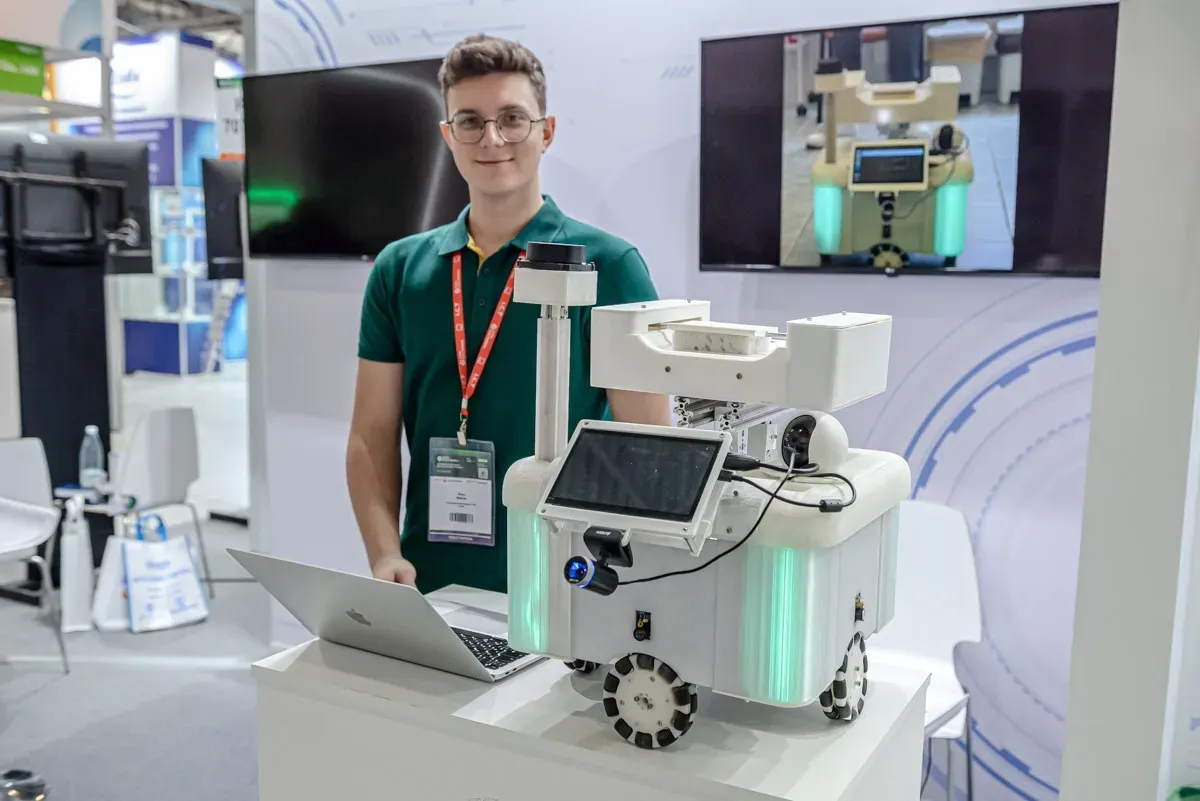
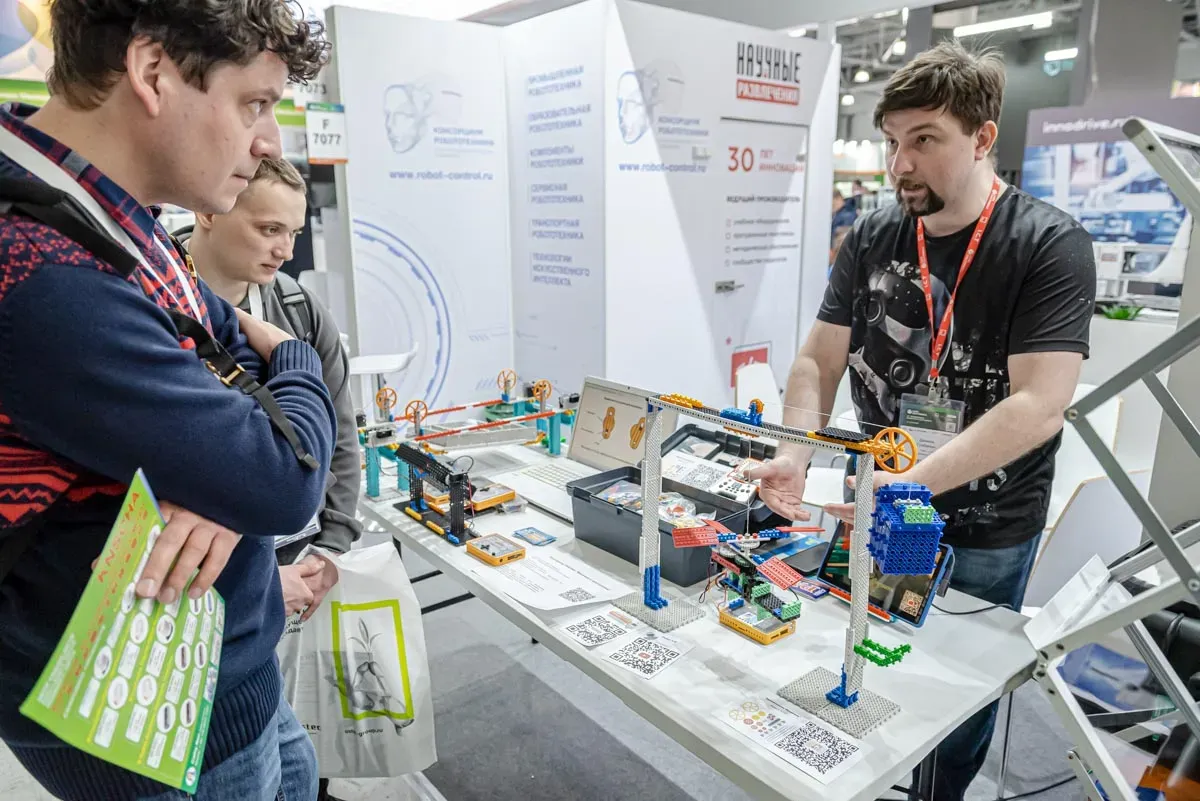
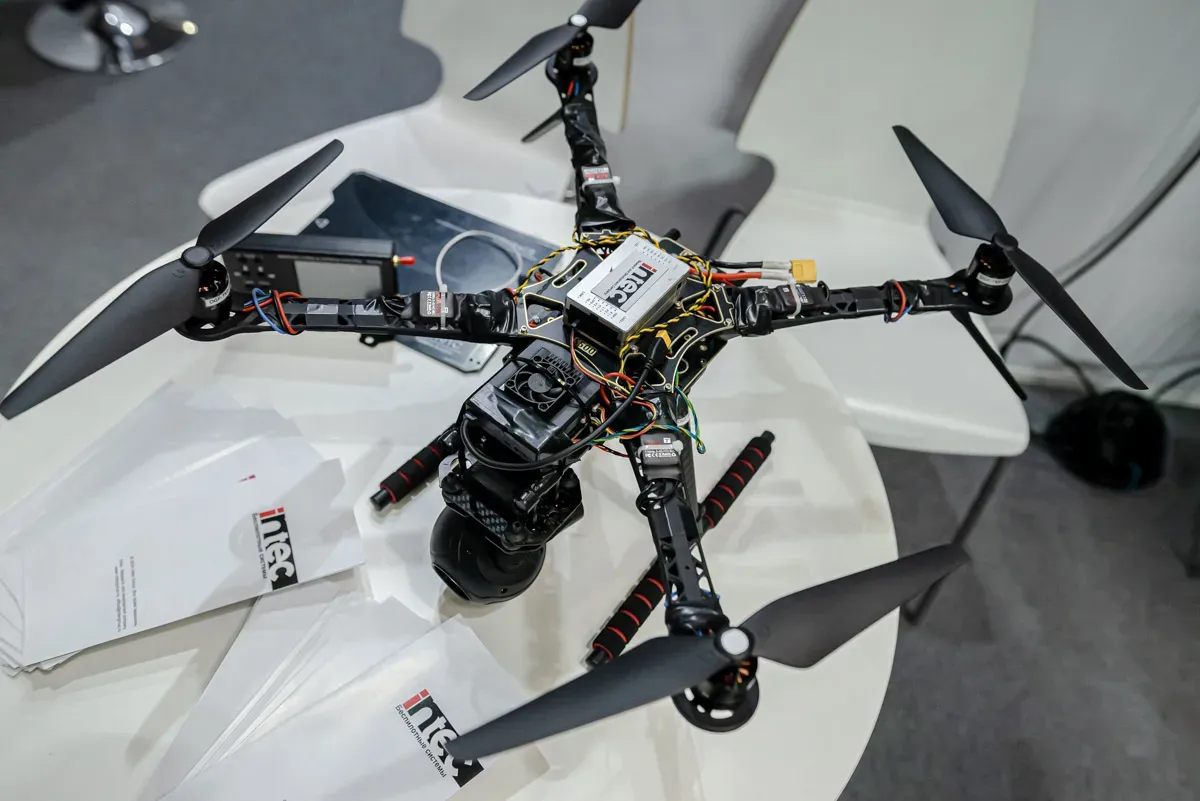
For the second year, ExpoElectronica participants have the opportunity to present their products in the Robotics sector. In 2024, the sector's exposition doubled. 7,500 specialists showed interest in the sector: 2,281 specialists were interested in robotics technologies and components, 2,214 in AI and control systems, 1,555 specialists were interested in robotics solutions, and 1,448 were interested in robotics software. As part of the ExpoElectronica 2025 exhibition, the Robotics sector area will be more than 400 sq. m., more than 30 companies will take part , presenting robotics technologies and components, robotics software, products for various areas of robotics, artificial intelligence and control systems.
 |  |  |
Present your products at ExpoCifra 2025! Participation in the exhibition will allow you to expand your sales geography, find new customers, communicate with leading industry experts and learn about current market trends.