


How Was The Second Day Of ExpoElectronica And ExpoCifra 2025
Russian electronic engineering, trends in robotics development, import of Chinese electronic components, the future of printed circuit boards and other pressing industry topics
Russian electronic engineering, trends in robotics development, import of Chinese electronic components, the future of printed circuit boards and other pressing industry topics
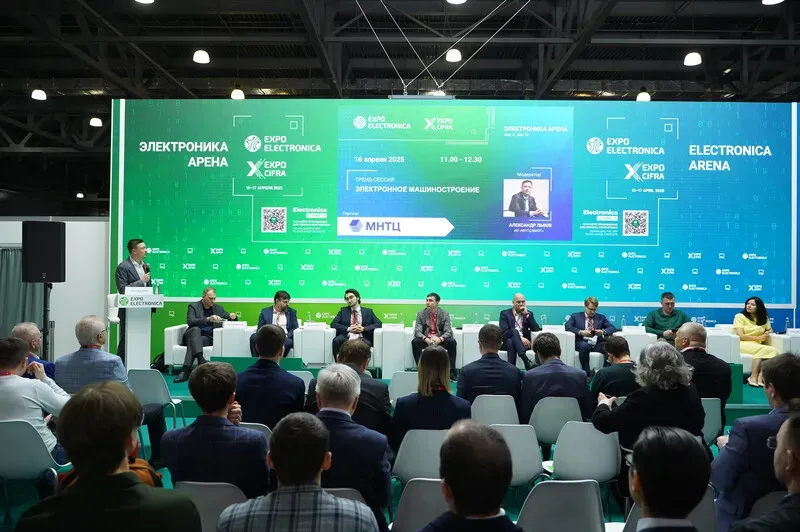
Trend session "Electronic engineering"
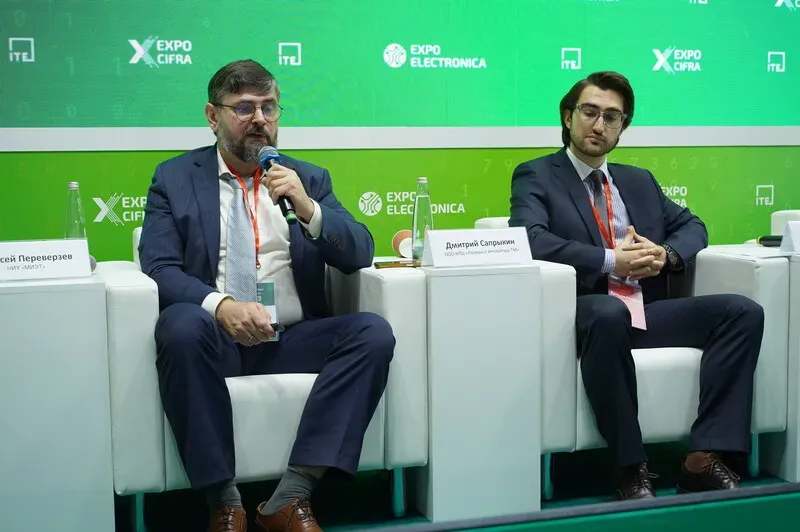
Moderator – Aleksandr Sergeevich Lvov , Head of JSC “MNTC MIET”. During the session, Aleksey Leonidovich Pereverzev , Vice-Rector for Innovative Development, Director of the Advanced Engineering School of the National Research University “MIET”, spoke. He covered the topic of staffing for the comprehensive electronic engineering program.
The goal of the advanced school of MIET is to restore the system of training personnel for the creation, design tools and production of electronic components. Two key areas are electronic component design tools and electronic component production tools. By 2030, as the speaker reported, the school should train 4,500 specialists.
Saprykin Dmitry Leonidovich , Development Director of the company OOO NPC "Lasers and Equipment TM", spoke about Russian laser equipment for processing microelectronics products. The technologist's laboratory journal is a modern interactive platform for keeping records of experiments on laser equipment. As the audience learned, the capabilities include: storing historical data, maintaining statistics, planning, automatic calculation of values by formulas, plotting graphs and a subsystem of recommendations for technological modes based on artificial intelligence.
Afterwards, Dmitry Saprykin presented the results of dividing wafers into chips and other operations of the Scientific and Production Center “Lasers and Equipment TM” in microelectronics.
Georgy Spartakovich Yeritsyan , Head of the Advanced Development Department at JSC NIITM, spoke about the status of development of special technological equipment for semiconductor production .
He classified the following types of service stations as produced:
// Plasma chemical etching
// Plasma chemical vapor deposition
// Heat treatment
// Physical application
// Growing epitaxial structures
// Cluster equipment.
In 2023, the company began developing equipment for ion implantation.
Stanislav Valentinovich Gusev , head of the center for development and implementation of promising technologies at the Federal State Unitary Enterprise VNIIFTRI, showed research and calibration plates, provided an analysis of the structure of the market for measuring instruments and the potential for import substitution. According to the analysis:
// The predominance of domestic measuring instruments: weighing equipment, instrumental metering of water, gas, electricity and heat for individuals, measurements of the characteristics of ionizing radiation and nuclear constants.
// The predominance of foreign-made measuring instruments: radio engineering and radio electronic measurements, optical and optical-physical measurements, physical-chemical, biological and medical measurements.
The expert emphasized the problem of the unavailability of Western element base for the production of radio-technical measuring instruments. The company has developed several models of oscilloscopes, and work is also underway on coaxial wattmeters.
Valentin Igorevich Markov , Development Director of Sovtest ATE LLC, spoke about the universal scalable control and measuring platform and automatic crystal mounting unit. Advantages of the solution:
// reduction in dimensions
// weight loss
// increasing accuracy and productivity
// plate handling option
// modernization of system units in order to improve technical characteristics
// increasing the share of Russian components.
 |  |
Trend session “Industry 4.0: robotization and automation”
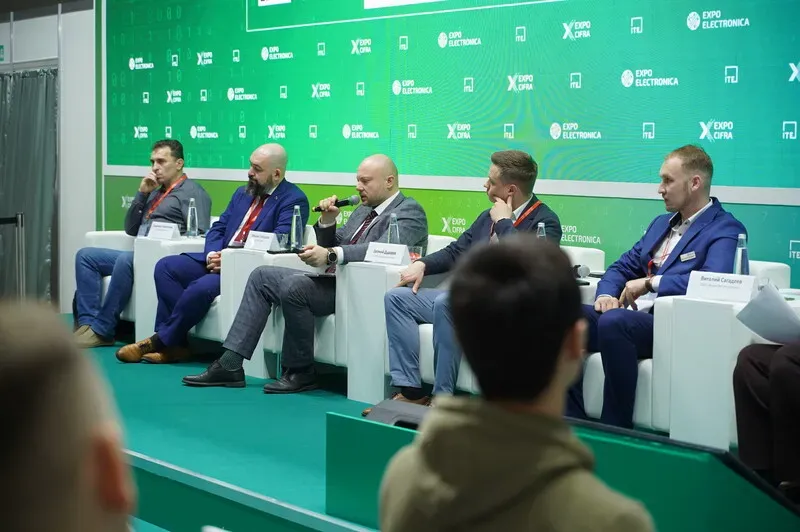
Another central event of the business program of the second day was the trend session "Industry 4.0: robotization and automation". Evgeny Aleksandrovich Dudorov , executive director of JSC NPO Androidnaya Tekhnika, spoke at it.
The speaker spoke about the consortium, the purpose of which is to form and develop the Russian market for robotics and intelligent control systems, unite Russian developers and manufacturers of robotic devices, support them and represent their interests.
Next, Evgeny Dudorov described key technologies for the development of robotics, including onboard computers, internal state sensors, navigation and guidance systems, control centers, a machine vision system, and others. The expert also revealed the areas of the FP "Development of Industrial Robotics and Automation of Production" for 2025-2027. These include:
// Compensation of costs associated with the popularization of industrial robotics
// Preferential lending program for the purchase of industrial robotics
// Industrial Robotics Preferential Leasing Program
// Creation of PR development centers
// Compensation for discount on purchase of robotics
// The program of preferential loans of the FRP for technical re-equipment with the possibility of loan repayment
// Subsidizing interest rates on defense loans for components
// RoboSPIC 3.0.
The topic "Components for robotics" was covered by Maxim Borisovich Gurbashkov , General Director of InnoDrive LLC. He emphasized the need to form modified product lines and, in particular, spoke about the HARZA servo drive line.
Flat servo drives HARZA-PV are used in solutions where the drive length is limited and the diameter is not of great importance. The servo drives are a highly integrated design with a minimum axial length, where a flat motor, a wave reducer and a feedback sensor are combined. Flat drives have several configurations that differ in the level of supply voltage, the gear ratio of the wave transmission, the presence of sensors.
During his speech, the expert added that a steering servo was developed in 2024, and the servo drive is intended for installation as an actuator for UAVs weighing up to 0.5 tons.
Discussion battle: "Should we ban the import of Chinese electronic components if there is domestic production?"
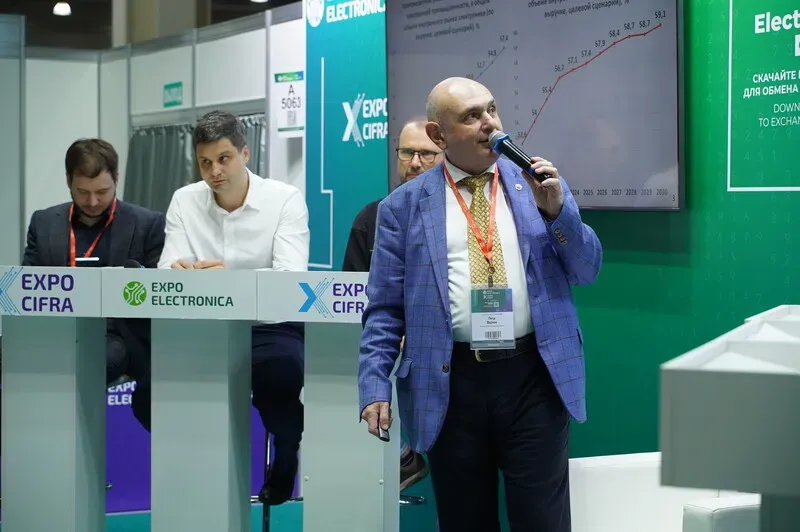
The battle was moderated by Petr Arkadyevich Vernik , director of the Passive Electronic Components Consortium: "Production in China has come to the point where the price of a product there is lower even taking into account delivery to the Russian Federation." The expert then spoke about the system of state support and the geographic specialization of the chain of creation of semiconductor products by added value.
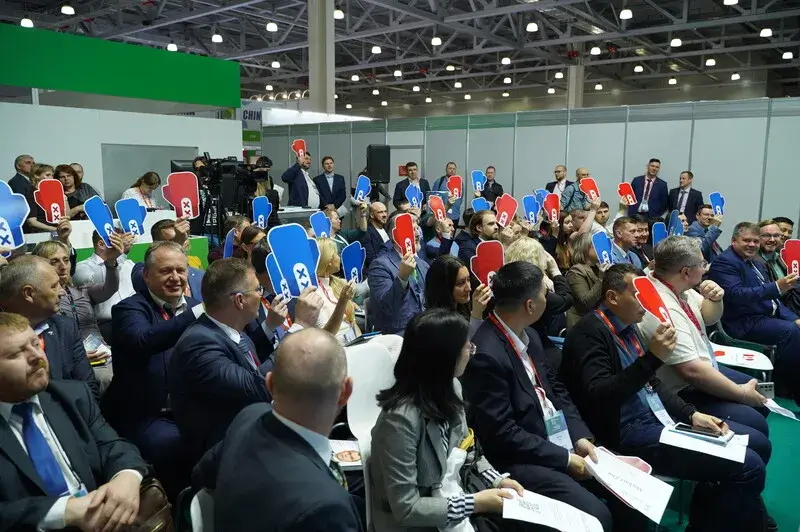
The most striking part of the event was the live voting of the audience when answering a series of questions from the moderator. Answering whether it is necessary to ban the import of Chinese ECB, 24 people spoke in favor of the ban, 21 against the ban.
Key experts, representatives of government organizations, Russian and Chinese manufacturers of electronic components, as well as representatives of domestic manufacturers of electronic equipment and their consortiums, expressed their position on the ban on imports of Chinese electronic components as speakers.
Dmitry Vladimirovich Kornachev , Executive Director of the Association "Consortium of Enterprises in the Sphere of Automotive Electronic Devices and Telematics": "Before banning imports, it is important to create a domestic EKB, work out the issue of raw materials and materials. Importing an analogue of domestic products and leaving our participants behind is unacceptable, as is any extreme form of solving the problem. The decision should be made only after discussion and argumentation of the industry community."
The expert also added: for certain types of products, it is possible to limit supplies from abroad as an experiment, but only for specific equipment.
Dmitry Kornachev's opinion was supported by Konstantin Alekseevich Kolegov , Director of Government Contracts at PJSC Element: "Only unscrupulous suppliers should be banned from importing in order to prevent unfair competition."
Vladimir Gennadyevich Romanov , Technical Director of JSC Resurs, also spoke on the side of the manufacturers . The speaker's main thesis is that it is important to improve the regulatory issue.
"You can try to choose one type of product and use exclusively Russian passive components for its implementation," the expert suggested.
Among the manufacturers, Denis Vladimirovich Makhin , head of the working group "Capacitors" of the expert council of the Consortium "Passive Electronic Components", deputy general director - chief designer of OOO "Kulon", also spoke at the event. The expert believes that it is necessary to slow down the supply of those products that domestic market players will be able to provide in the nomenclature.
To the question “Will Russian electronic component manufacturers be able to satisfy domestic demand?” 24 people voted positively, 28 thought no.
On the other side of the ring was Michael Zhu , Doctor of Economics and Management, Vice President of the Electronic Commerce Association, co-founder of ChipNobo.
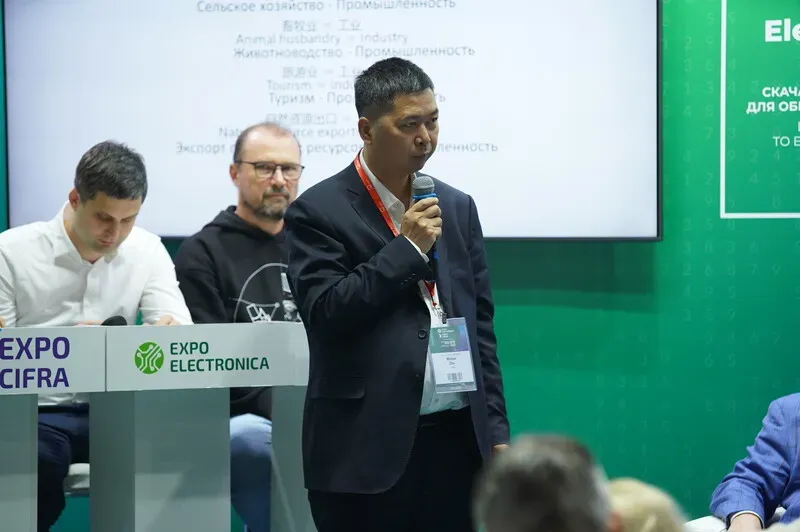
The speaker's key statements:
// A powerful industry is impossible without developing its own scientific and technical projects and personnel training programs. A strong industry contributes to the level of increasing the country's security.
// Among the production capabilities of developing countries is the transfer of production to other regions. At the same time, the main factors for the success of production are: consumer confidence in supplies, reliability and consistency of processes.
// Only 5% of foreign production is in China today.
Sanzhar Sagynbekovich Musayev , Commercial Director of HUAXIN, expressed an opinion opposite to that of the manufacturers . He believes that restricting the import of Chinese electronic components will speed up the development of production in the Russian Federation and reduce the country's technological lag more quickly.
To the question “Can high-quality electronic components be available at a low price on the Russian market?” by voting, 29 people answered “no”, 6 people – “yes, they can”.
Dmitry Kornachev concluded by citing the volumes of the consolidated market for electronic components for transport in 2024: "There will be a multiple increase in the volume of Russian components. If there is a ban, there is a risk of mothballing and stopping upgrading options for civilian use. We support an end-to-end approach, and when at least two manufacturers appear and their production capacity is in reserve, we can talk about a ban on imports."
In response to the question “Are consumers ready to buy domestically produced electronic components at a higher price?” 20 people expressed their willingness, while 18 respondents were against it.
 |  |
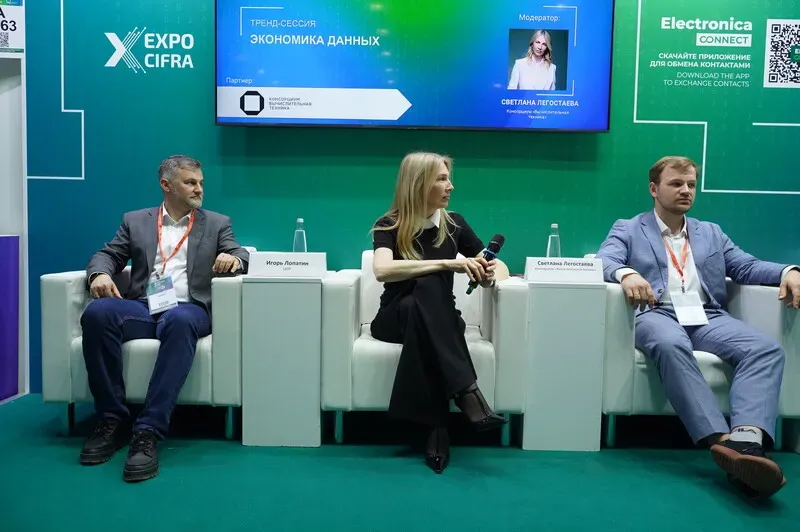
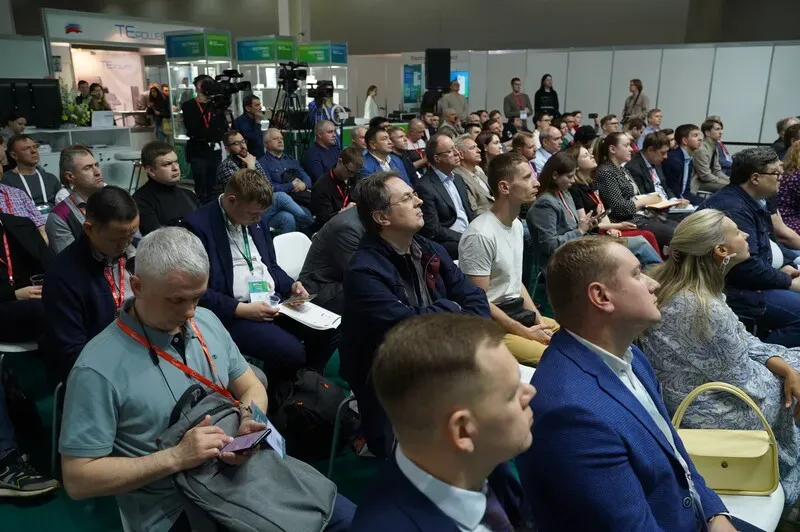
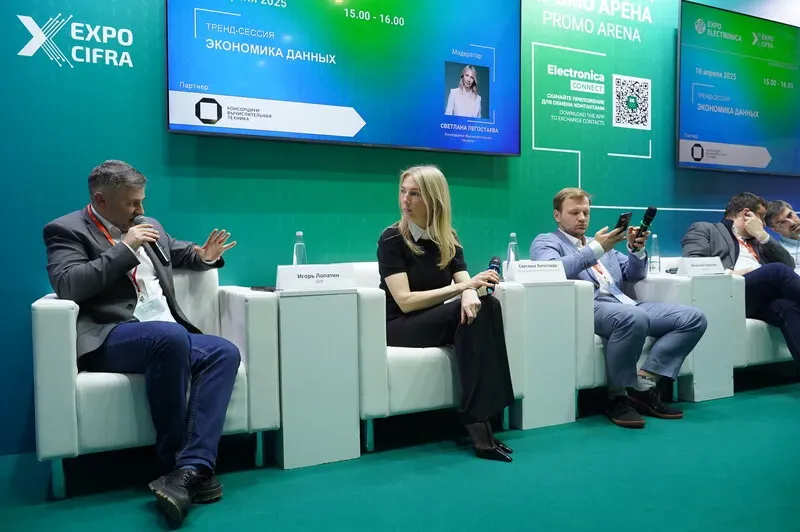
Trend session "Data Economy"
The session was moderated by Svetlana Sergeevna Legostaeva , General Director of the Computing Technology Consortium.
The event's speakers came together to discuss the most important topics for the industry:
// what tasks does the new national project “Data Economy and Digital Transformation of the State” set for Russian developers and manufacturers;
// what equipment will be most in demand within the framework of the national project implementation;
// what tasks have already been solved, what difficulties have been encountered at this stage;
// is it worth jointly developing Russian software, hardware and digital platforms;
// How should domestic companies act if their Western colleagues return?
 |  |  |
Discussion session “Challenges and Prospects: Where is the Russian printed circuit board industry heading?”
Among the speakers was Andrey Kucheryavy , CEO of Rezonit LLC. He presented the production capacity of printed circuit boards in the Russian Federation for 2025–2027. Today, there are 2,650 manufacturers, and the growth of production capacity “will be even more noticeable.” According to the provided review of the printed circuit board market, its capacity is 1.23 million m2. At the same time, Russian production is 230 thousand m2, imported – 1 million m2.
Petr Semenov, CEO of Ostec-Service-Technology LLC , provided statistics on the global printed circuit board manufacturing market. By area, as of 2024:
Asia – 20%
Japan – 3%
Europe – 1%
America – 1%
China – 75%.